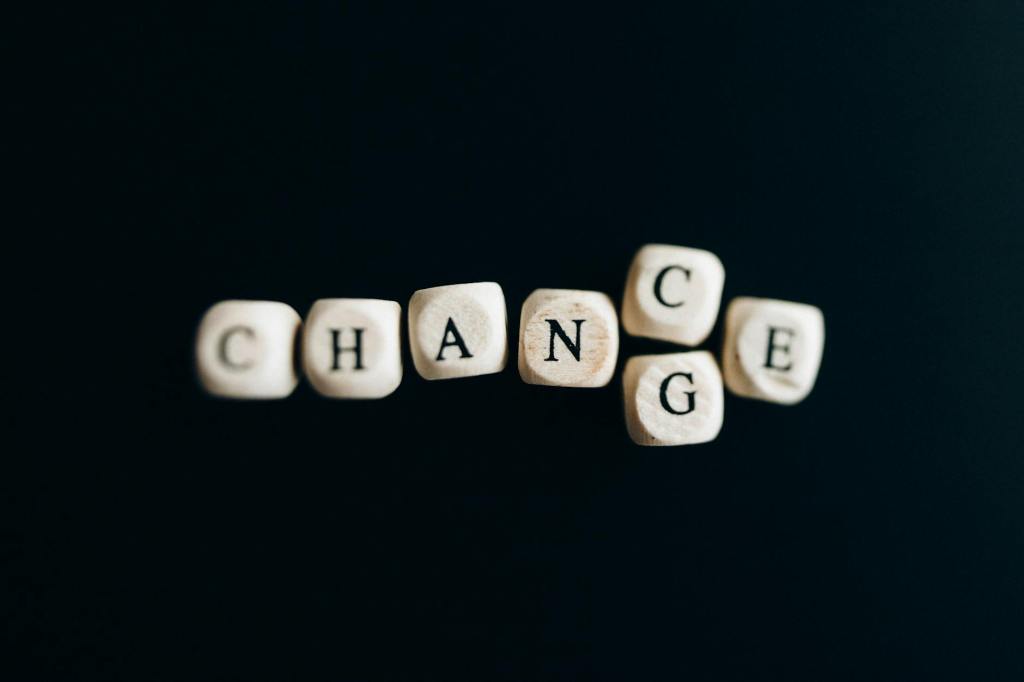
Change rarely asks if we are ready. It arrives unannounced – reshaping routines, expectations, and the sense of control we thought we had. Sometimes it’s subtle; a new process, a restructured team, a shift in direction. Other times it feels seismic – the kind of change that makes the ground beneath us feel unsteady.
I stepped into a new leadership role just as the team was reeling from unexpected change. Their longtime leader – someone they deeply respected and had followed for over twenty years- had been let go. The loss was raw, and trust felt fragile. Then, just as we began to find our footing, the world changed again. COVID-19 hit, and the uncertainty that had been confined to our team suddenly stretched everywhere.
I was a new manager trying to lead a group through both grief and global upheaval. None of us had a roadmap. What I did have was the choice to show up – to admit what I didn’t know, to ask honest questions, and to stay steady even when everything felt uncertain. That experience taught me something lasting: when everything shifts, the most powerful thing a leader can offer is humanity.
As leaders, we often feel the pull to steady everything at once – to fix, explain, reassure. But leading through change isn’t about pretending to have all the answers. It’s about standing in the uncertainty with enough calm and honesty that others can find their footing too.
In moments of transition, people don’t expect perfection; they look for presence. They notice how we speak when we don’t yet know the outcome, and how we listen when they need to make sense of what’s unfolding. Our steadiness gives others permission to pause, to breathe, and to trust that movement will eventually turn into progress.
Honesty builds stability. Calm creates space for others to breathe. Together, they form the foundation of trust. Even a quiet “I don’t know yet, but we’ll figure it out together” carries more strength than forced certainty ever could.
Leading through change also means honoring what’s being left behind. Every shift, no matter how positive, carries a measure of loss. Acknowledging that truth doesn’t weaken leadership – it humanizes it. It allows people to feel seen in the process, rather than managed through it.
Vision doesn’t always mean knowing the final destination. Sometimes it means seeing the next few steps clearly enough for everyone to take them together. That kind of clarity, grounded in empathy, keeps teams moving even when the future feels uncertain.
Change reshapes teams, but it also reshapes leaders. Each transition teaches us how to hold steady in the wind – not by resisting it, but by learning to bend with purpose.
Reflection
Think about a time when change tested your balance. What helped you stay grounded – and what did you learn about the kind of leader you want to be when everything shifts?
 Leading Between the Lines
Leave a comment